Medial Collateral Ligament (MCL) Sprain
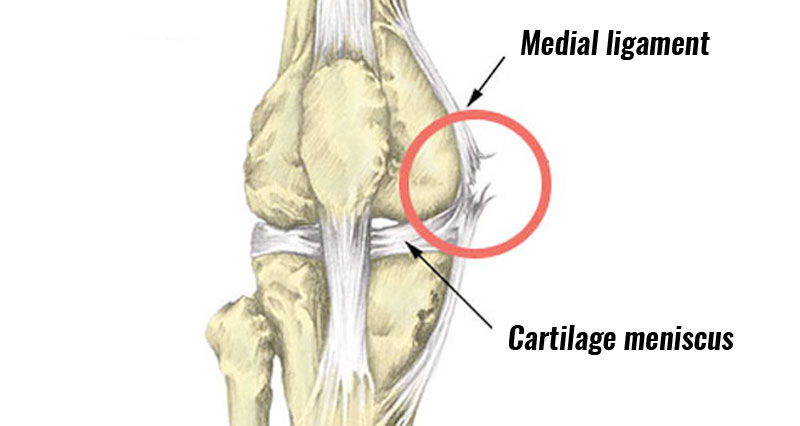
An MCL sprain is a common knee injury that affects the ligament on the inside of the joint. It often occurs during twisting movements or when a force pushes the knee inwards.
Early treatment and structured rehabilitation are essential to restore stability, reduce pain and prevent long-term problems. Without this, the knee can remain weak and prone to re-injury.
This guide explains the key symptoms, causes, treatment and recovery process for an MCL sprain.
Medically reviewed by Dr Chaminda Goonetilleke, 5th Dec. 2021
What is an MCL sprain?
An MCL sprain is a tear of the medial collateral ligament in the knee. The injury can range from a mild sprain (small tear) to a complete rupture, depending on the force involved.
MCL sprains are graded from 1 to 3:
- Grade 1: Mild stretching or a minor tear, with little instability
- Grade 2: Partial tear, with some instability
- Grade 3: Complete rupture, with significant instability
The medial collateral ligament plays an important role in stabilising the knee, particularly by resisting forces that push the knee inwards.
MCL sprain symptoms
Symptoms of an MCL sprain vary depending on the severity of the injury, but typically develop quickly after the incident. Common symptoms include:
- Pain and tenderness along the inside of the knee
- Swelling, which may appear within a few hours
- A feeling of instability or the knee “giving way”
- Pain when the knee is forced inwards (valgus stress)
- Stiffness and reduced range of movement
In more severe injuries, pain may be intense initially but can sometimes reduce quickly, leaving noticeable looseness or instability in the joint.
MCL sprain diagnosis
An MCL sprain is usually diagnosed through a physical examination. Imaging is only required if a more serious injury is suspected.
Clinical examination
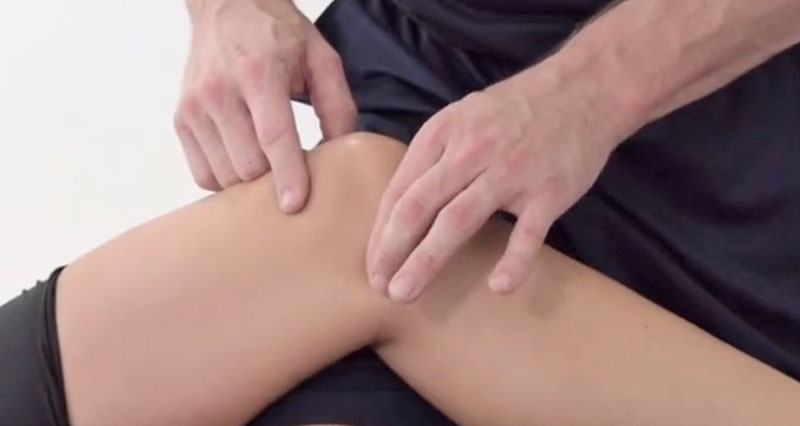
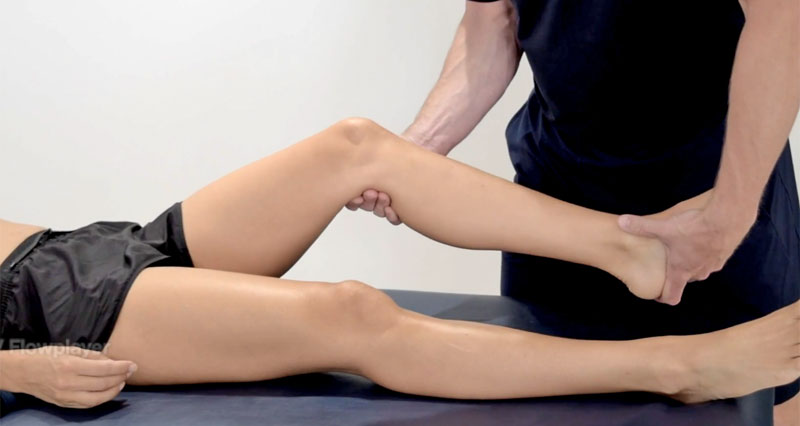
Your physio or doctor assesses your knee by feeling along the inside of the joint and applying a valgus stress test, which stresses the medial ligament.
Pain along the ligament indicates injury, while increased movement compared to the opposite knee suggests a more severe tear. Range of movement and overall stability are also assessed to rule out additional damage.
Grading the injury
The severity of the sprain is graded based on pain and joint laxity:
- Grade 1: Pain with no significant instability
- Grade 2: Partial tear with some looseness
- Grade 3: Complete rupture with marked instability
- Imaging
MRI scans may be used in more severe cases to confirm the extent of ligament damage and identify associated injuries such as cartilage or ligament tears. X-rays are sometimes used to rule out fractures.
Differential diagnosis
What else could it be? Other causes of pain on the inside of the knee with similar symptoms are:
- Medial meniscus tear
- Pes anserine bursitis
- Medial plica syndrome
- Osteoarthritis.
More on MCL sprain diagnosis
Anatomy
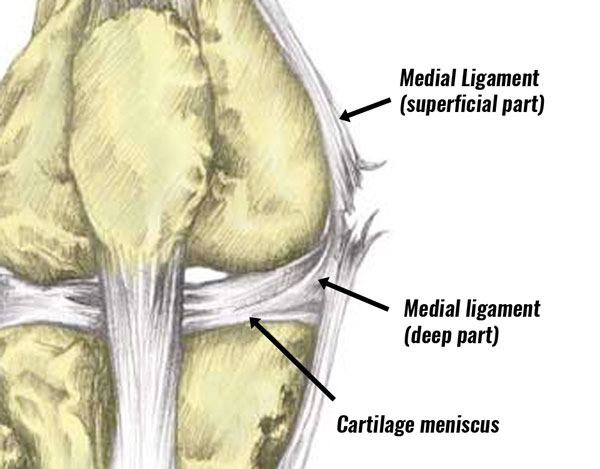
The medial collateral ligament (MCL) connects the femur (thigh bone) to the tibia (shin bone) on the inside of the knee.
Its main role is to stabilise the knee by preventing it from moving inwards (valgus movement), particularly when force is applied to the outside of the joint.
The MCL has two parts:
- A deep portion, which attaches to the joint capsule and the medial meniscus
- A superficial portion, which runs from the femur to the upper inner surface of the tibia
What causes an MCL sprain?
MCL sprains usually occur suddenly as acute knee injuries, although they can also develop gradually over time.
Sudden onset/acute injuries
MCL injuries are common in contact sports such as football, rugby, and martial arts. However, they can also occur during everyday activities, such as a fall or a twisting movement at the knee.
Direct trauma
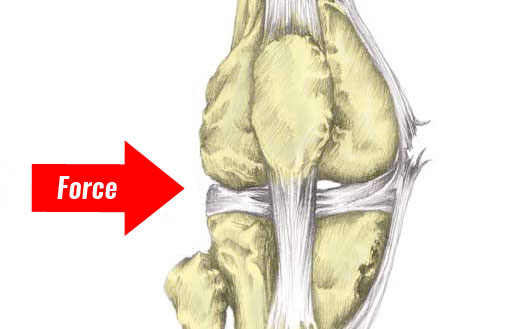
Injury to the MCL often occurs from a direct blow to the outside of the knee, particularly when the knee is slightly bent. This force pushes the knee inwards, stretching the ligament on the inside. If the force is strong enough, some or all of the ligament fibres may tear.
The deep portion of the ligament is often affected first, which may lead to an associated medial cartilage meniscus injury.
Twisting
Twisting the knee can also cause an MCL sprain and may occur alongside an ACL tear.
A common mechanism is attempting to turn or change direction quickly while the foot is firmly planted. This causes the knee to twist, placing stress on the medial ligament and potentially leading to a tear.
Gradual onset MCL sprains
Repetitive sideways forces on the knee (known as valgus forces) can gradually lead to an MCL sprain.
For example, repeatedly kicking a football with the inside of the foot or performing similar movements in martial arts.
However, gradual onset pain on the inside of your knee should also be considered for other conditions, such as pes anserine tendinopathy or bursitis.
Treatment for medial ligament sprains
Treatment for medial ligament sprains includes immediate first aid followed by a structured MCL rehabilitation program.
Cold therapy & compression
Apply the PRICE principles (protection, rest, ice, compression, and elevation) as soon as possible to reduce pain and swelling.
Apply ice or a cold therapy wrap for 10 to 15 minutes every hour during the early stages. Reduce the frequency as symptoms improve.
Do not apply ice directly to the skin, as it may cause burns. Instead, use a damp cloth or a commercially available cold therapy wrap, which also provides compression.
Rest
Rest from training and any activities that cause pain. This allows the ligament to heal.
Continuing to train through pain can delay healing and prolong recovery.
Wear a knee brace
Use a compression bandage or knee support in the early stages to help reduce swelling and protect the joint.
Later, a hinged knee brace may be recommended for grade 2 and 3 injuries. These provide additional stability by limiting sideways movement.
More severe injuries may require a limited motion-hinged knee brace to control knee movement
Electrotherapy
A qualified therapist may use electrotherapy, such as ultrasound, to help manage pain and swelling.
Ultrasound uses high-frequency sound waves to stimulate the tissues, producing a mild therapeutic effect that may help reduce swelling.
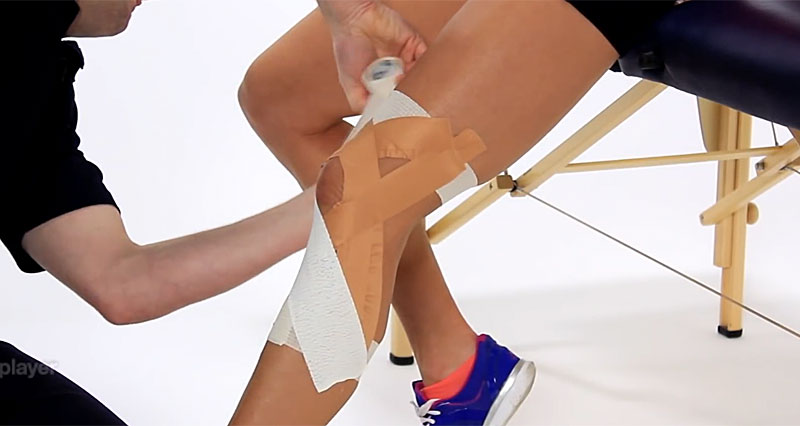
MCL sprain taping
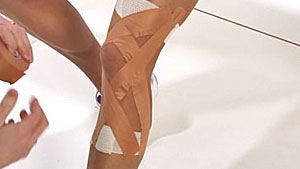
Taping your knee can provide effective support and protection. Sports taping is useful in the early stages and later when you return to full training.
Sports massage
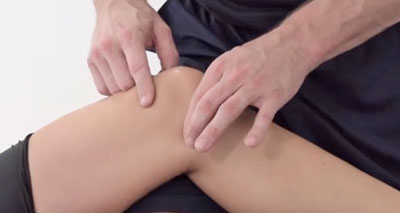
You should avoid massaging the injured ligament during the early acute stage.
Later, as the ligament heals, light cross-friction massage may help. This is particularly useful if you have persistent pain in the later stages of rehabilitation.
Do I need surgery?
Most medial ligament sprains do not require surgery. However, if you have additional damage to the knee, such as an ACL tear, surgery may be recommended.
There is ongoing debate about whether surgery offers any advantage, even for grade 3 injuries, compared with bracing and rehabilitation.
How long will it take to recover?
- A mild MCL injury (grade 1) typically takes 3 to 6 weeks to recover.
- More severe grade 2 or grade 3 injuries may take 8 to 12 weeks.
Exercises
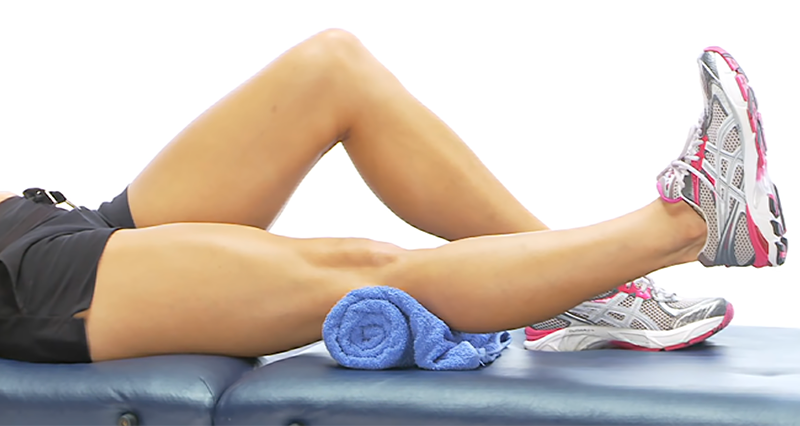
Specific exercises are an essential part of recovering from an MCL sprain, helping to restore movement, strength, and stability in the knee.
Early exercises focus on gentle mobility and muscle activation, before progressing to strengthening and balance work as healing improves. Later-stage exercises prepare you for a return to normal activity or sport.
Because exercises should be introduced at the right stage of recovery, it is important to follow a structured plan rather than progressing too quickly.
See full MCL sprain exercise guide.
MCL sprain rehabilitation
International Rugby Physiotherapist Phil Pask has created ourwhich takes you step by step from injury to full fitness. A structured rehabilitation program is the most effective way to recover fully from an MCL sprain and reduce the risk of reinjury.
Our step-by-step MCL sprain rehabilitation program, created by Phil Pask, takes you from early injury through to full fitness. It is criteria-based rather than time-based, meaning you only progress when your knee is ready.
The program includes:
- Early-stage pain and swelling management
- Gradual restoration of movement
- Progressive strengthening exercises
- Balance and movement control training
- Return-to-running and sport-specific drills
Go to the MCL sprain rehabilitation program
Expert interview
Elite football physiotherapist Neal Reynolds explains MCL sprain treatment.
References & research
- Indelicato PA. Isolated medial collateral injuries in the knee. J Am Acad Orthop Surg 1995;3(1):9–14.